‘Deadly Inheritance’ going to print

Personally, at least, it was a week of mostly good news.

Deadly Inheritance is now past all proof-reading and review stages, for both hardback and paperback versions, and is going to print. I don’t have any hard and fast numbers, but I suspect it will be available for purchase very soon. I was contacted Saturday morning to make the last adjustments, if necessary (there were none), and thus I postponed my fence project for half a day.

Fence project, you ask?

Yeah. After spending more than I feared on a six-foot chain link enclosure for our new dogs, Trip and Trigger, I have now had to reinforce the enclosure with wood.  The dogs insisted upon it. We adopted the dogs from the Jenks, Okla., animal shelter: two Siberian Huskies, fairly young. I brought them home last Monday.  On Tuesday morning, I opened the back door to find them out of the enclosure, awaiting me and, I suppose, breakfast. The younger dog had worried the wire fence where it attached to the bottom of the gate, created a hole just large enough, and there you have it. The amazing thing is that they did not leave for parts unknown but were content to stay around the house.

Since Tuesday morning I have had them boarded in a nearby kennel until I could make improvements. Some of it took place on Thursday, most of it yesterday, and I finished the job this afternoon after my morning church duties. I’ll bring them home tomorrow.

In the meantime, I am sore, bloodied and fatigued from working on the fence. Bloodied only because I cut myself on various pieces of wood screws and wire, sore and fatigued because there was a great deal of crawling around on cold ground, and a lot of getting up and down. Not used to it.

But it’s a good fatigue because the job looks good, seems pretty secure, and the exercise is useful. (I’m in the middle of what looks to be a successful weight loss effort.)

In other news, I’m working on a second novel and, in the middle of it, a short story that I am compelled to write while the plot line is burning in my mind. I’m thinking it may anchor a collection of short stories I’ve been sketching.

I haven’t the heart at the moment to discuss what a garbage week it was for the nation. You can get plenty of that reaction elsewhere. I prescribe prayer and patience, no matter what you read, hear or view in the mainstream media or on social media, plus a plea to be as objective as you can and review all possible evidence before making judgments.

Later.

Anticipating my first book

I created this blog site over a year ago in anticipation of the time that I would need it. The time, it seems, is now.

After several months of writing, re-writing, editing, proof-reading and listening to the feedback of a few brave friends, my first real novel is about to be published. I’ve written a lot of words in my life, mostly as a newspaper reporter and editor. Even won a couple of awards. (A full-page feature, with photos, of mud-wrestling in Tulsa was deemed one of the outstanding feature articles for that particular year. Sadly, I forget which year it was.)

Writing a novel is different. It takes patience and persistence. There also comes a point in the creative process where the story takes possession of the writer. Or at least that was my experience. The characters became real human beings. As I wrote, I found that it was difficult to allow them to do anything out of character, even when it was necessary for the plot to move forward. This was a good thing, because my characters had to struggle with their personal foibles and inconsistencies, just as all humans should.

At any rate, I will soon announce the release of “Deadly Inheritance”, a modern western/mystery of about 471 pages, to be available in hardback, paperback and electronic editions. The publisher is Outskirts Press of Denver, Colo. There will be more details to come.

A belated Happy New Year and a joyful 11th day of Christmas to all.

– David Jones

Save us from the fires of Hell … and those who would deny its existence.

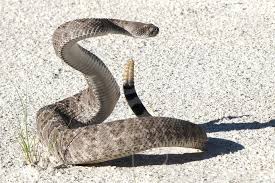
There are several versions of the cautionary tale of the “tender woman” and the “snake.” Sometimes it’s a young boy who is trying to prove himself in the wilderness. One version has a turtle giving a ride across a river to a large scorpion.  The story goes something like this: A young Indian boy is on his Vision Quest.rattler

During this he will prove his prowess at survival. Perhaps he will find his spirit guide  as well.  By journey’s end, he returns to the tribe no longer a boy, but a man.  During his journey, he nearly dies of thirst, but he encounters a rattlesnake who claims to be dying as well.  The snake tells the boy he knows where there is water and food, but will need to be carried in order to show the way.  The boy is naturally reluctant to agree, but since the snake has solemnly promised that he will not bite, the boy’s hunger and thirst overcomes his sense of danger. Thus the unlikely pair set out to a mountain in the distance. The snake keeps his promise, and they arrive at a beautiful valley where there is a cool, refreshing spring and plenty of game for the boy to hunt and eat.  That night, in celebration, the boy dances around his campfire in joy for having survived the worst part of his trek and for having found his spirit guide (the rattlesnake).  The snake, also rejuvenated, joins the dance. They whirl faster and faster, the boy singing a song of triumph, the snake weaving and bobbing its head to the quiet rhythm of moccasioned feet.

Suddenly, with no warning, the snake leaps, burying his fangs deep in the young boy’s neck.  The boy falls to the side of the fire, exhausted and horrified, for he knows that there is nothing that he can do to remove the venom. “Why?” he cries out to the snake. “I carried you to water and food. I helped you survive.  You promised you would not hurt me! Now I am going to die.”

The snake grins and declares, “You knew damn well I was a snake before you picked me up.”

That is the way each version of the story ends. The moral: Sooner or later everyone and everything acts according to its nature.  The nature of the snake, or scorpion, is to strike.  Befriend them at your peril.

Perhaps Pope Francis never heard a version of this story.  He has oft befriended an older gentlemen named Eugenio Scalfari, a co-founder of the left-wing Italian newspaper, La Republicca.  They meet occasionally and talk, and like the sun rising in the East, there appears a by-lined article in which the pope is quoted saying something not just controversial, but heretical.  It happened again during Holy Week when an article had Pope Francis telling Scalfari that, while Heaven exists for those who accept salvation, Hell does not exist.  In fact, he was quoted, those who are not saved will simply cease to exist.

How convenient for Signori Scalfari, since non-existence is what atheists expect at the time of death. Had Pope Francis actually said such a thing, it would be heresy.  Since the pope has on several occasions discussed the dangers of Hell, we can safely assume that Scalfari, who takes no notes in his interviews, reinterpreted their conversation to reflect at least 50 percent of his belief (he believes good people also cease to exist when they die).  Scalfari is no theologian, but he knows how to sell newspapers.

The obvious question is why Pope Francis grants “interviews” to this man who has bit him not once, but at least three times in recent years.  Each time the secular world has most definitely noticed. This time it obscured the pope’s own message and ministry during Holy Week.  At a time when Christians should be proclaiming the Good News of the Resurrection, we are having to answer silly Facebook and Twitter posts and listen to the laughter of those who are not friends of the Church.

Yes, it will all die down, but it will not completely go away. For those of us involved in ministry and teaching, it is one more piece of noise with which we will have to contend.  I do not mind contending – after all, that’s what we are called to do.  I am less than overjoyed that this noise comes from upstairs, so to speak.  I find it hard to imagine St. Pope John Paul II ever falling into this trap, or Pope Emeritus Benedict, so I guess what I am really saying is that I’m spoiled.  Most of my adult life we had popes that were media savvy, and less apt to take risks with their words.

Yet I cannot throw stones. (Plenty of others are eager to do so, sadly.)  How many times have my own clumsy words come back to haunt me!  Oh, how many hurt feelings have I engendered while trying to be clever, or incisive!  And then there are those times when I said something hurtful on purpose, in pride or anger or to justify my standing.  If I am brutally honest, I can see something similar happening to me as happened with the pope.  The difference is that the world would not know of it, or mock it.

But someone would, and I suppose the object lesson to be taken is to be careful, for even the loss of one human soul who rejects the teachings of Christ is a tragedy, an incalculable one.  For all of us are loved infinitely by the Eternal, and He desires the salvation of each of us so much that He sent His Son to suffer and die so that we might have the gift of Eternal Life.

Christ’s teaching has not changed, nor will it. Scripture and nearly 2,000 years of tradition affirms that there is a place of wailing and gnashing of teeth, where the flame never quenches and the worm never dies.  Jesus spoke of Hell eloquently and often.  Saints and sinners alike have been given mystical glimpses of the infernal regions and have written of their visions.  Just as Colton Burpo’s story, “Heaven is For Real” captivated millions a few years ago, so too should the depictions and warnings of eternal punishment guide our thoughts and conduct today. Hell is for real, too.

I’ve experienced moments in life when it was tempting to yearn for non-existence.  That is but another of the Evil One’s seductions.  It is a dangerous belief, especially for those who are contemplating suicide, for the supernatural reality is that there are but two ultimate destinations, and this present reality merely a proving ground, a temporal place where we bear our crosses as patiently as each is able, and learn to be overcomers.

It is worth repeating the Fatima prayer: “O my Jesus, forgive us our sins, and save us from the fires of Hell. Lead all souls to heaven, especially those in most need of your mercy.”

Amen.

Oh, for a wee bit more sunlight …

The last two nights were the coldest of the winter thus far.  Tuesday may have been the coldest I have experienced at this latitude, and was certainly the chilliest since we arrived several years ago.  With any luck, this is the low point for the winter.  I am tired of winter already. The cold, the dark, the imposed indoors.  The leaking outdoor faucet that trickles a small sliver of ice onto the area where we park our vehicles, with no way to shut it off without cutting the water to everything else.  The realization that the faucet needs replacement with a newer, cold resistant device, and there’s nothing I can do about it until the weather warms, and there is sufficient daylight after work to accomplish the task.

Aye, there’s the rub, as the bard said.  Part of my frustration is with nature – which is natural, I guess.  But a bigger part is that if this were a sensible civilization, I could have that extra hour of daylight now, when I really need it, and not have to wait until mid-March.  You may say this is a trivial complaint but I disagree: it is something that cuts to the very heart of the freedom we have surrendered in our modern world.

It is time to make a stand for a permanent change in that process we call daylight savings time.  My gripe is not so much with the idea of moving the clock forward, but that we have to ever move it back again.  Push it ahead, I say, or leave it behind and, damn it, leave it alone.

In the name of progress – so many things have been done to us in the name of progress – our nation went to Universal Daylight Savings Time (with a couple of notable exceptions) in the 1960s.  It would save energy, the experts and the politicians told us.  They also promised we would love summer days extended.  The initial “experiment,” if you could call it that, divided the year into nearly equal parts DST and Standard Time.  In 2007, a Congress dominated once again by progressives gave us more “daylight time” by extending it into November and reviving it again in March, again declaring that we could save .003 percent on energy usage and save the planet.

Problem is: no one really knows if we’re saving energy or not.  As one researcher for the Oak Ridge National Laboratory remarked in 2016, in order to know whether are saving energy we would have to do a study that includes areas which intermittently participate in DST and then drop out for a comparable length of time.  There are no such studies and no such geographical areas.  We have no baseline data to indicate whether we are harvesting the fruits of energy saving.  However, there are other well-documented studies which cast doubt on DSTs energy-saving powers.

Did anyone ever asked the question: why is it necessary to mess with my clock to save energy? I am the one using it.  I am the one paying for it. If I desire to save energy (and I generally do), I can lower my thermostat, increase and improve my home insulation, switch to geothermal, buy solar panels (assuming I can afford them and ignore the math on their longevity).  There are many other proven voluntary actions that will increase energy savings and the balance in my checkbook.  But it should be my decision.  Incent me, O overbearingly concerned politicians, with tax credits and such, if you insist, but the decision should be mine.

Let us be truthful: Daylight Savings Time is much more about lifestyle than energy savings. A nation that lives in cities and suburbs like the idea of extra daylight after work. Because the extra daylight goes away during the darkest days of the year only magnifies the desire to get it back.

At what cost?  We have growing medical (scientific) evidence that some, perhaps most people pay a serious price with their health during the transitions from “daylight” to “standard” time.  When the clock leaps forward or falls back, they lose sleep, experience extra stress, suffer more heart attacks and strokes, and are often more irritable at work.  The time for most of us is one to three weeks before our sleep cycles adjust.

In other words, there is a human toll. You cannot put a price tag on the value of human life, or even human discomfort. But are our political lifestyle managers paying attention?  Is anyone pushing for a common sense change?  Face it, Congress is hard of hearing when We the People show up without writing checks to political action committees.  The nation’s dwindling corps of farmers, who still convince their livestock that the hours have changed, learned this lesson decades ago. On the other hand, big retailers love daylight time because people shop later, although they may be indoors, shopping online these days.

From a practical point of view, I like the extra daylight. I would like it even more if it were available in the darkest winter weeks and months. That’s exactly when we do not get it.  Logically, it seems that if we save energy (theoretically) in summer by leaping forward, should we not save even more in winter (theoretically) by just leaving it ahead?But who am I to tell the rest of the world (including you, dear reader) where to set your clocks? Yet the world seems to think nothing of imposing its will on mine! This is not only wrong, I would propose that it is immoral.

If you believe in God, you accept and rejoice that He created the sun and the moon, darkness and light, day and night, summer and winter, spring time and harvest.  If you prefer to believe in the God-like properties of Mother Nature, instead of Nature‘s God, then you are apt to similarly except the limitations of daylight and darkness.  It is only if you believe in the God-like powers of humanity that you believe there is no limit to the manipulation of time and space, all in the name of the greater good, of course.

During the past century, in our Gold Rush-like race to evolve our society, including an embrace of all things technical and “scientific,” we have wrought many changes to human life.  Some are clearly beneficial. Some, not so much.  In the stew of additives, medications, communications and altered modes of thought and speech, I would argue that we have become strangers to the natural world, distanced from our planet, and from one another in unhealthy and even dangerous ways.  Perhaps daylight savings time was meant to send us out doors in the evenings, instead of to the shopping malls.  But what a blunt instrument we have chosen in order to influence a change in human behavior!  How we allow others to have authority over us, and we do not ask them, “When did you consult us to do this?”

Meanwhile, human behavior keeps changing as our tools and our toys change.  What good does it do to be outdoors if we instead prefer places where there is a strong Wifi signal. Worse, what good is it to be outdoors if our eyes are riveted on the little screen of our phones?

Our personal decisions should be kept personal, else we lose all semblance of independence.  Independence means nothing if it is not protected and conserved.  We should not easily hand over any of our powers to decide, even the very smallest, for it is there that the over-arching grasp of authority pinches most acutely.

I want to be free to observe time based upon my observation of the day’s passage (which is the essence of the scientific method, is it not?   There really is no conflict between Faith and Reason.)  The sun comes up, a new day dawns. It should not be arbitrary whether it is 6:30, or 7:30, depending upon the month or the day.  It should not be up to experts, bureaucrats and politicians to interfere with the natural cycle of life.

How to regain control from the bureaucrats in Washington?  First, we must have this conversation.  Then, perhaps, we apply pressure to our elected representatives at the state and federal level. We demand common sense. In pressing for the extinction of daylight savings time and its twice a year idiocy, in a very small way we could begin the return control of our lives back to, yes, individuals. We the people.

Life doesn’t have to be so damn complicated. It was never meant to be so. Think about it. Pray about it, if you are one who believes in prayer.

There is a precedent for rolling back sweeping progressive lifestyle changes.

Are you old enough to remember, or have you been told, of the great experiment in a national speed limit: 55 miles per hour, except on a very limited set of national highways.  This was meant to enforce energy savings upon us because, we were so earnestly told by the same group of progressive experts, the world was running out of oil, and the United States, as a major energy consumer, needed to set an example.  We were also told that it would save lives as motorists went slower.  The federal law came to pass in 1974.

This experiment was about as popular as prohibition.  Sammy Hagar expressed the outrage of a frustrated nation when he screamed, “I can’t drive 55!”  Troglodytic citizens like myself discovered CB radio, radar detectors and quietly voted for people who assured us that they would push for giving control of speed limits back to the states.  In 1995, the first Republican-controlled Congress in forever repealed the “double nickel” speed law, and a measure of sanity returned to the land.  What we had learned was this: highway deaths did not decrease during the 55-mph era — but they have decreased since then, thanks to safety innovations in automobile manufacture and stricter enforcement of drunk-driving laws.  While the experts thought we would save 2-3 percent more energy with slower speeds, the savings were meager, if at all, and did not take into account the cost of increased times in travel and delivery.  Time, after all, is money.

Perhaps the Daylight Savings changes are not as inconveniently obtrusive as the 55-mph speed limit.  But ask your friends, at least those who have not surrendered their capacity for rational thought to their progressive overlords, about how they feel twice a year when the clock changes are mandated.  Do not be surprised that they find them annoying or worse.

Think about it.  Pray about it.  We could make this happen.
Be it resolved, in 2018 …

New Year’s resolutions should be done with serious intent, else you reveal yourself as a not-serious person. A resolution – or a set of them – brought forth with no intention to keep them is a frivolous exercise, a pre-ordained futility.  It is said that most New Year’s resolutions are abandoned within a few days, and very few survive the January chill.  I wonder if it has always been so or is this another sign of a people who have forgotten how to be resolute?  What is the point of free will if one refuses to abide by one’s own decisions?

This year I have committed to a small list that I am certain will test my resolve:

  1. To be more charitable toward those who are not acting in a charitable manner. (Perhaps it is necessary to define charity. Aquinas defines this as the love of man for God, and the concomitant love of man for neighbor, together the greatest commandment. It is much more than the giving of goods to others, but the giving of one’s better nature. Charity is lacking in our society these days.)
  2. To confine my eating to a 10-hour window so as to discipline my body with extended fasting. Recent studies have shown this an effective way to lose weight and to bring about other beneficial health changes.
  3. To walk a bit more, and to talk a bit less.
  4. To listen to others with greater intensity.
  5. To pray with fewer distractions.
  6. To put more love into my work, and more work into the love I profess.
  7. To visit the confessional at least once each calendar month. As I tell my students, reconciliation is like a shower. Everyone needs to wash off the accumulated dirt occasionally.