So much to say, so little time to write it down, now that the sun is shining a bit more. Saturday was a big outdoor work day: prepping the grow beds for planting, mowing the big honkin’ yard, taking down the Christmas lights (yeah, I know). It was good to get out into the sunshine, build up some additional immunity with God’s own Vitamin D. The worked stretched into Sunday afternoon after “going” to live-streamed Church.
It included dusting several fire ant mounds. You have a problem with that? You obviously have not had a deep personal relationship with fire ants. They are intruders to our latitude and do much harm well beyond their blasted biting.
It was good to get away from social media for a few hours. The level of imbecility and sheer propaganda is hard to take.
A positive of self-isolation is that I am cooking more often, occasionally trying new recipes. But once a week, we will order take-out from a local restaurant to support the “little man” (or woman) who is struggling to stay in business during the Great Covid-19 Panic of 2020. Saturday night’s search for a restaurant was discouraging. So many of the good ones have shuttered for the duration, leaving few in operation.
The longer the rule-makers keep us locked down, the less likely the closed restaurants emerge from quarantine. The fast food chains have fared better because they knew how to do “drive through.”
We settled on Si Senor, a Mexican restaurant in Wister. They adapted by adding a drive-through and keeping their help busy. Great food, reasonably priced, and well worth the 12-mile drive.
On Sunday, we had pot roast, okra, squash and mashed potatoes, to remind us of God’s bounty (and perhaps a reminder to get those seeds in the grow beds). Just as our country should not rely on foreign sources of critically needed items – like medicine – so we Americans should not be totally beholden on grocery stores chains to provide for us in tough times.
My children used to mock me for my prepping efforts. Today, they are asking for advice. Truth is, prepping is an investment of time, money and effort. I spend too much time working and writing to be a good prepper, but I don’t tell them that.
Not just about the freedom to grow a beard or to go clean shaven, although that’s part of it. Not about choosing Pepsi over Coke, or Miller over Budweiser. Or the decision to wear a red dress rather than a blue dress? Freedom is more than these.
“Of course,” you reply.
How about the freedom to move to another city or state? To reinvent yourself? To start a small business with your family or a couple of friends? To take a different type of job?
“Yeah, I guess. If I really wanted to,” you say.
How about the freedom to walk down the street without fear of being spied upon by a drone which relays your position and activity to a governmental entity (via a private company that has agreed to provide this information)?
“Duh! That sounds like a police state.” (Correct: it is, and it’s already here.)
The freedom to be wrong? To be completely upside down on your facts and opinion? And the freedom to say incorrect things with your voice, your pen, your social media post?
“I’m not sure I agree,” you may say. “People should not be allowed to disseminate false information. They need to be held accountable for their statements. There needs to be a gate-keeper against fake news.”
Do you believe the freedom to fail?
“Whoa!” you may exclaim. “That’s going too far. We should have the freedom to succeed!”
If this is what you believe, then I must conclude that you do not believe in freedom. Or, more likely, you don’t understand it.
Freedom is a dangerous concept because it comes loaded with potential side effects. But these are not necessarily bad things. In some cases, they are features.
What is Freedom? Freedom is the opposite of slavery. Most people are against slavery, as understood in the traditional sense. Chains, coerced labor, denial of basic human rights. And you are correct to oppose this kind of slavery.
But slavery goes beyond the obvious. Slavery includes being told what to think, what to eat, how to live, where to work, who to vote for, whose orders to obey, where you can travel, when you can travel, who you can talk to, and who you can’t. Slavery includes limitations on how much you can earn, and how much you should be taxed in order to sacrifice “for the good of everyone.”
There is no such thing as a society with perfect freedom. But there are societies that are more free than others. You have heard it said that “with freedom comes responsibility.” And this is true. But you have to understand the nature of freedom and where those responsibilities kick in.
The United States is a country that has conducted a great experiment in freedom. The founders declared that all people are born with the rights to life, to liberty and the pursuit of happiness. They followed up a few years later with a Constitution which included a Bill of Rights that set limits on the powers of government.
Why? Because the greatest danger to individual freedom is the conception of “group rights.” In the name of the “good of everyone,” you can legislate practically anything. Little by little, the shackles and chains declared necessary by law to protect various oppressed groups, animals, plants, and even the planet itself, begin to tighten the noose around our ability to live as free men and women.
The freedom to succeed must include the freedom to fail, or it is not freedom. There is no such thing as guaranteed success, and once we begin to issue societal guarantees of success (for the good of the whole) it is only a matter of time when universal failure results.
Today every individual has the opportunity to voice their opinions to a wide audience. Freedom of speech and press is guaranteed to Americans. But there are voices of fear and intimidation, supported by rich individuals and corporations, who want to ban speech with which they disagree. And in many instances are succeeding. They pay fealty to government bureaucrats for political and economic protection.
This is evil. It is a forerunner to the slavery of thought. Of group-think. It is, at its basic level, un-American. We do not need gate-keepers and media overlords to police our thoughts and voices. This is an offense against Freedom. The cure for differing opinions is not censorship, but more freedom. Allowing a robust debate of fact and opinion. Let people decide for themselves. Let the best ideas triumph, and the worst fail.
Once we relinquish our freedom to speak our minds, it is only a matter of time when our rights to freedom of association, to petition for redress of wrongs, to peaceably assemble, and to practice our religious beliefs openly will be infringed, limited, regulated and shackled.
Consider what kind of society you wish to bequeath to your children and children’s children. Will it be one of opportunity, or one limited by the tyranny of the collective?
Loving freedom does not mean that you hate government, only that you require your government to be obedient to the wishes of those who pay the bills. You require it to be held accountable for its behavior, at home and abroad. This includes fiscal accountability, not profligate spending of money that will shackle future generations with sky-high taxes and/or crippling inflation.
Freedom is slipping away. Soon, you will be asked to support a path that will take you even farther away from freedom. Please say no.
How will you fare if the Collective solves your problems?
Just because someone coughs in the supermarket does not make them Covid Mary. Its allergy season, for crying out loud! Not to mention that they were more than six feet away from you. Are they carrying the virus? Who the hell knows? Even they don’t. But people have to have groceries. Few people were stocked up to handle a week of isolation, let alone a month. Which is where we are.
The “experts” pretty much agree that, sooner or later, everyone will contract Covid-19 unless a miracle vaccine is developed in the next two or three months. The social distancing urged upon us was meant TO SLOW the spread of the virus, not to STOP it. That can’t be done. Not yet. And the slowing was meant to save our hospitals, our medical personnel and our supplies from overuse. And this, even in places like New York City, has been achieved.
If I were King of America – and thank God, I am not – I would decree that all citizens under the age of 35 go back to work tomorrow, or at the very least Monday. The only exception would be those who have known underlying health conditions. We have enough experience now to know that very few of those who get the illness in this age group get seriously ill.
We also have enough “experiential observation” (the media calls it “anecdotal,” but that’s an attempt to skew public opinion) to realize that Hydroxychloroquine Sulfate works really well to relieve the symptoms of Covid-19, in most cases allowing the patient to resume a normal life in a few days.
We can argue about the phrase “normal life.”
I would mandate virology (antibody) testing for all workers ages 36-60. If they have the antibodies, give ‘em a gold badge and send them back to work, if the jobs still exist. Then I would do the same thing for 61-70, if they are still in the work force.
And, finally, I would encourage the nervous Nellies of our country to study history. Real history, not the BS that the progressive professors peddle. Read novels. Watch old movies made before the thought police took over production. Learn that the world has always been a dangerous place. Epidemics, pandemics, recessions, depressions come and go. People die.
They are also born. Many thrive. Just as most of us will look back at this a year from now and wonder why we over-reacted. Yes, we will mourn our losses, but we will also celebrate our victory.
As I write, Father’s Day is scarcely halfway and already I’ve been humbled three or four times by children (and their spouses), which is only fitting, since true fatherhood is and should be an exercise in humility from start to finish. Their public and private tributes may be riddled with hagiography but, on this day, it is good that we dads should overlook lapses in truthsomeness.
(Yes, I know it
isn’t a real word but this is how new words get created!)
One of my sons
penned an essay on fatherhood today (well done, Jason) and in it posed these
questions: “What makes a father who he is?” and “Is there a specific time,
event or person who bestows the wisdom required to be successful as a dad?” He goes on to make some great conclusions of
his own, but it provides me with a springboard with which to provide answers of
my own.
Biology makes any
male a father. That part is easy. Too easy.
Turning young
males into men who can be effective and successful fathers requires wisdom and
example. This is where timing, events and role models come into play.
Truth is, there
were times when I was far from a perfect father. There are no classes you can
take to learn father skills or certifications and, if there were, today’s
Social Justice Warriors would just screw them up like they do everything else.
Fatherhood is mostly on-the-job training, and the key is “on-the-job.” If you, like me when I was a very new father,
spend too much time away from home and family in pursuit of life’s ambitions,
your training suffers. I was
self-absorbed, intellectually arrogant and prideful. I did not know what I did
not know. In short, I was representative
of a growing number of young men of my generation who now have been joined by even
more clueless legions of fathers who either lacked good role models or rejected
their efforts.
Such is life.
I do not blame my
own father. He was a good role model. I was an independent, ungrateful little
dumb-ass who couldn’t wait to leave home and make my mark on the world. If Dad
had been a healthy man, he might’ve changed my life trajectory. He died at age
45 of congestive heart disease, likely fearing that he had failed to bring me
up properly.
It was not pride
of my own family that led me to become a better father, but the humility of a massive
fall from grace that brought me to my knees – and to my senses. I spent the last half of my life as a father
with children in the home trying to atone for the first half. That I more or less succeeded is a tribute to
the depth of a desperate spirit of repentance and the wisdom I absorbed from
the Eternal Father, who placed great examples in my path in the form of Church
and Word. A wife who instinctively
realized her need for an improved husband and father helped, too. Good fathers
require support systems. It is difficult
to go it alone.
Age and mellowing
also helped. In the early days, I usually reacted too quickly as a parent. The
old “shoot first, ask questions later” style of parenting. I was no Ward Cleaver, sad to say. The Eternal Father is patient with His
children, infinite Justice tempered by equally infinite mercy. Getting the balance right, for a human
father, is an ongoing struggle, even when the children become adults.
There is no
getting around this next truth: True fathers are called to be good role models.
Whether you like it or not, your children will model your behavior. If you are
rash, they will be rash. If you are impatient, they will display impatience. If
you are greedy and self-absorbed, they will figure that’s what life requires. If
you are absent, they will at first accept it as reality, and later condemn you
for your absenteeism. Worse, they may
discover that life is better without your negative qualities, and they will
condemn you (at least internally) for your negative influence upon them.
Conversely, if you
are loving, patient, kind, giving and attentive, they will model your behavior.
Oh, they will fail sometimes and disappoint you, but they eventually will
master the learning curve of life. Don’t give up on them. Ever.
Here, for my sons
and all who might be interested, are suggestions for good fatherhood:
1. Attend church
with your children. A Swiss study in the 1990s found that a father’s role was the
critical factor in whether his children would keep their faith intact as adults.
A mother’s role was important. Two parents sharing their faith meant that
nearly 75 of their children would continue to worship, a third all the time. But
if only one parent could attend, there was a marked difference as to the
result. If the father brought their children to church, the percentage who
would stay faithful actually increased, as if in response to a mother’s “laxity.” But if a mother alone brought her children to
church without a father, only 2 percent would remain steadfast and 60 percent would
abandon the faith.
I cannot explain
this finding, only that in my observations, it is borne out repeatedly. Fathers
are important.
2. Be
humble. Lord knows there is enough pride
stalking this world. There is a reason pride is one of the seven deadly
sins. It gets out of control too quickly
and too often. I don’t care what causes you believe in but hear me out: We do
not need Pride Parades. We need Humility Parades. Especially in an age in which
we have tremendous powers to wield over the world, economies, cultures and
lifestyles.
Humility is the
antidote to pride. It puts the evil one and his minions to flight. It pleases
the Eternal Father when we embrace it.
3. Be a good listener. Let your children know they can come to you and discuss anything, and that you will hear them out fully, before rendering your thoughts.
4. Be a good
story-teller. Children of all ages want
to know their family history, your history, and the anecdotes of your life. Learn
to tell them well – don’t be a bore. And only tell them upon request. A little
mystery is compelling. It is okay to
embellish for story-telling purposes, but only to a point, and that point is
when truth is rendered false.
5. Be a good
husband. Treat your wife with respect in all the ways that count. Do not
denigrate her before your children, or in public. Defend her at all costs.
6. Be self-giving
or, in another term, be sacrificial. Do things that are inconvenient out of
love for your wife and children. Be quick to volunteer to do a hard thing for
someone else as long as it will not take away a life lesson that needs to be
faced. Sacrifice is part of the Law of
Love that is inescapable for a Child of God. We die to ourselves in order to
live for others and, in return, find that we lose nothing of value. We gain
love by giving love.
7. Be joyful.
Have a sense of humor. It is a spiritual thing. It will help you through many a
personal or family crisis and will set an example of grace under pressure that
your children will follow. Eventually. No one wants to be around a sour-puss,
cynic or hate-monger. Smile. I love the
Spanish term for smile: “Sonrisa.” Like
a sun rise! God causes the sun to rise on the just and the unjust every
day. Likewise, we need to smile on our children,
when they are good and when they are lacking in goodness, every day.
8. Be the priest in your domestic church. You are the pater filliis, the father of children. You set the tone and you start in the home. Then you take it into the world.
9. Seek God’s help in prayer and in Word, when the answers to “father questions” elude you. Seek out human guidance carefully, using only those with a proven track record of success.
10. Give thanks for all your successes and failures. Remember that you will learn more from a failure than a success, though it may not seem so at the time. Divine Providence includes challenges, obstacles and hardships to train us for the journey and our ultimate destiny. Embrace your little cross.
Thank you to all
my children and to all who helped me on this journey to becoming a better
father.
Happy Father’s Day.
Five of my six children. Not shown, but no less loved, is my eldest son, Jeremy.
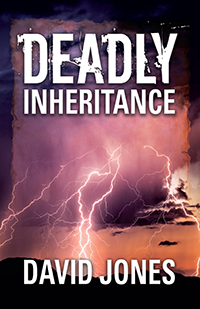
My new novel, Deadly Inheritance, is already on sale at Amazon, as well as through the website of the publisher, Outskirts Press. If you find it elsewhere, please let me know.
It’s available in paperback, hard-cover and digital edition, as well as a budget-friendly pdf if you like to read on your hand-held or whatever.
I would describe the book as a modern Western mystery – fiction, of course – with a strong faith element and a romance. Somewhat complicated, I suppose, but then so is life. Here’s the synopsis on the book jacket:
Two years after surviving an IED attack that killed the rest of his squad in Afghanistan, Josh Davenport is wasting away in Fort Smith, Arkansas. He keeps a tight rein on his emotions and his dwindling finances. Though physical wounds have healed, his mental scars and the senseless traffic death of his parents left him reclusive and disillusioned, shunning old friends and refusing to make new ones. Angry at a God he doesn’t quite believe in, he seeks no miracles and expects nothing ahead but disappointment. He needs a change, but his prospects are dim. When a certified notice arrives that he has inherited property in Wyoming from a rancher he has never met, he breaks out of his comfort zone and undertakes the long drive to Lone Creek, an old mining town on its last legs. Within hours, his life is threatened, thieves try to steal his truck, and a colorful old lawyer warns that he might be in line to inherit a fortune – if he fulfills the conditions of the will and thwarts the schemes of a rich coal baron. A truck stop waitress and a cowboy priest offer aid and comfort, but also complications, as Josh faces growing threats and the question: What good is wealth if you’re dead? Deadly Inheritance is a mystery that blends themes of the Old West, new technology, romance, and a young man’s encounter with a legacy of faith that alters his outlook on life and death.


 After the Gold Rush